
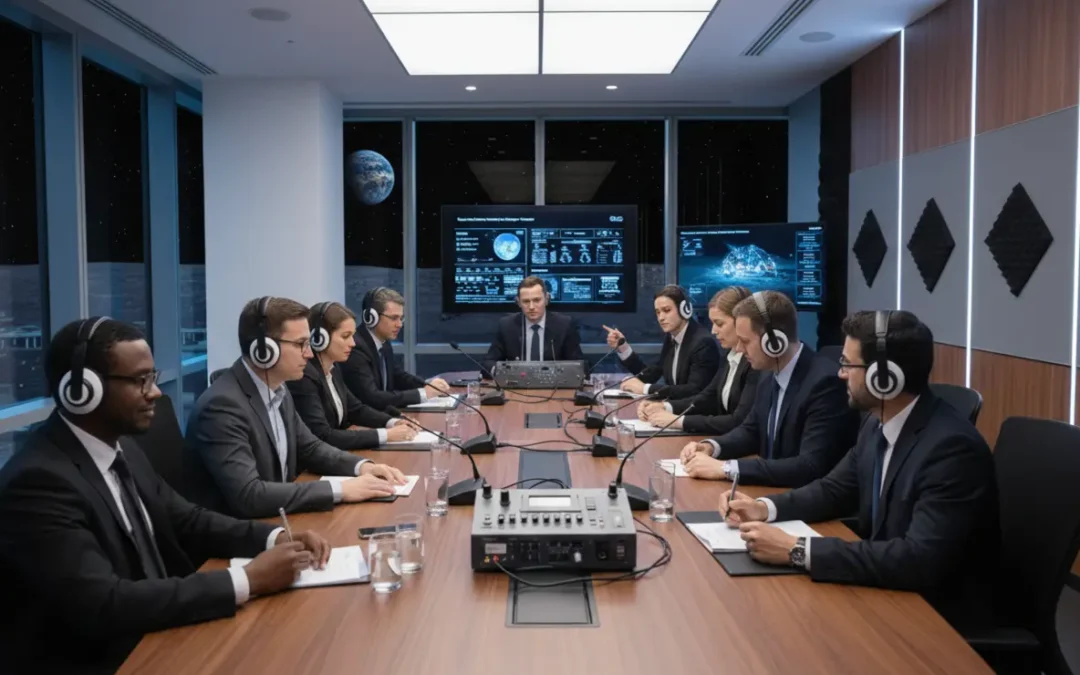
An interpreting system plays a critical role in ensuring clear communication at multilingual conferences, meetings, and international events. As global collaboration continues to grow, organizations increasingly rely on professional interpreting systems to overcome language barriers and deliver smooth, effective communication.
This article explains what an interpreting system is, how it works, and why it has become an essential tool for professional events.
What Is an Interpreting System?
An interpreting system is a professional audio solution designed to deliver real-time language interpretation during meetings and events. It allows interpreters to translate a speaker’s message into another language while participants listen through wireless receivers and headsets.
The system ensures that interpretation happens without interrupting the speaker, maintaining the natural flow of the event.
How an Interpreting System Works ?
A standard interpreting system consists of several key components working together:
-
Interpreter microphone and transmitter
-
Wireless receivers and headsets for participants
-
Audio integration with conference microphones
The interpreter listens to the speaker through headphones and delivers the translation into a microphone. The translated audio is then transmitted wirelessly to participants, who can listen in their preferred language in real time.
This setup ensures clear and synchronized communication throughout the event.
Types of Interpreting Systems
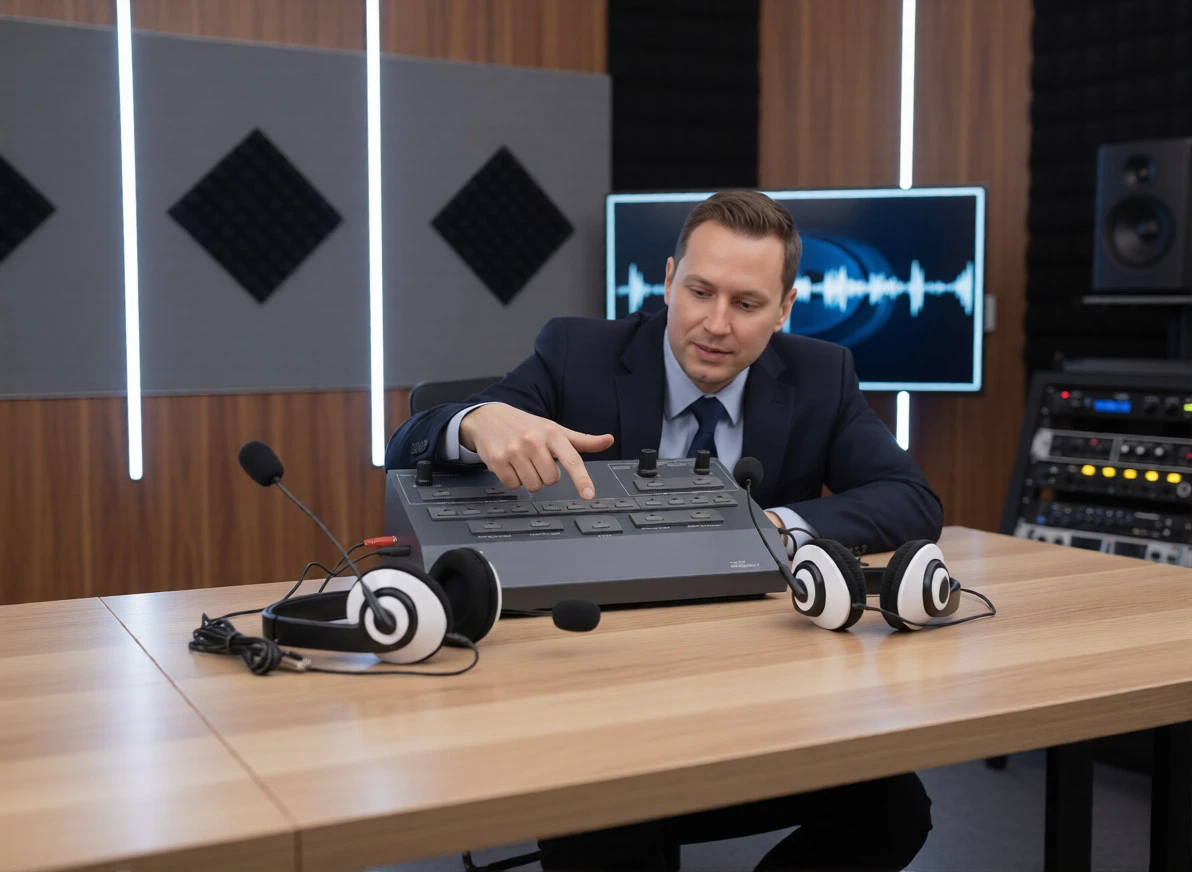
Different events require different interpreting solutions. Common types of interpreting systems include:
Simultaneous Interpreting System
This system is used when interpretation must happen in real time. It is commonly used for international conferences, diplomatic meetings, and large multilingual events.
Portable Interpreting System
A compact interpreting system suitable for smaller meetings, training sessions, or mobile setups.
Tour-Based Interpreting System
Used during guided tours or site visits where participants need interpretation while moving.
Each interpreting system is selected based on event size, language requirements, and venue conditions.
Why an Interpreting System Is Important for Conferences ?
An interpreting system ensures that all participants can fully understand and engage with the content, regardless of language differences.
Key benefits include:
-
Clear communication for multilingual audiences
-
No interruption to speakers
-
Professional and organized event flow
-
Improved audience engagement
Without a reliable interpreting system, important information can be misunderstood or lost entirely.
Events That Commonly Use Interpreting Systems
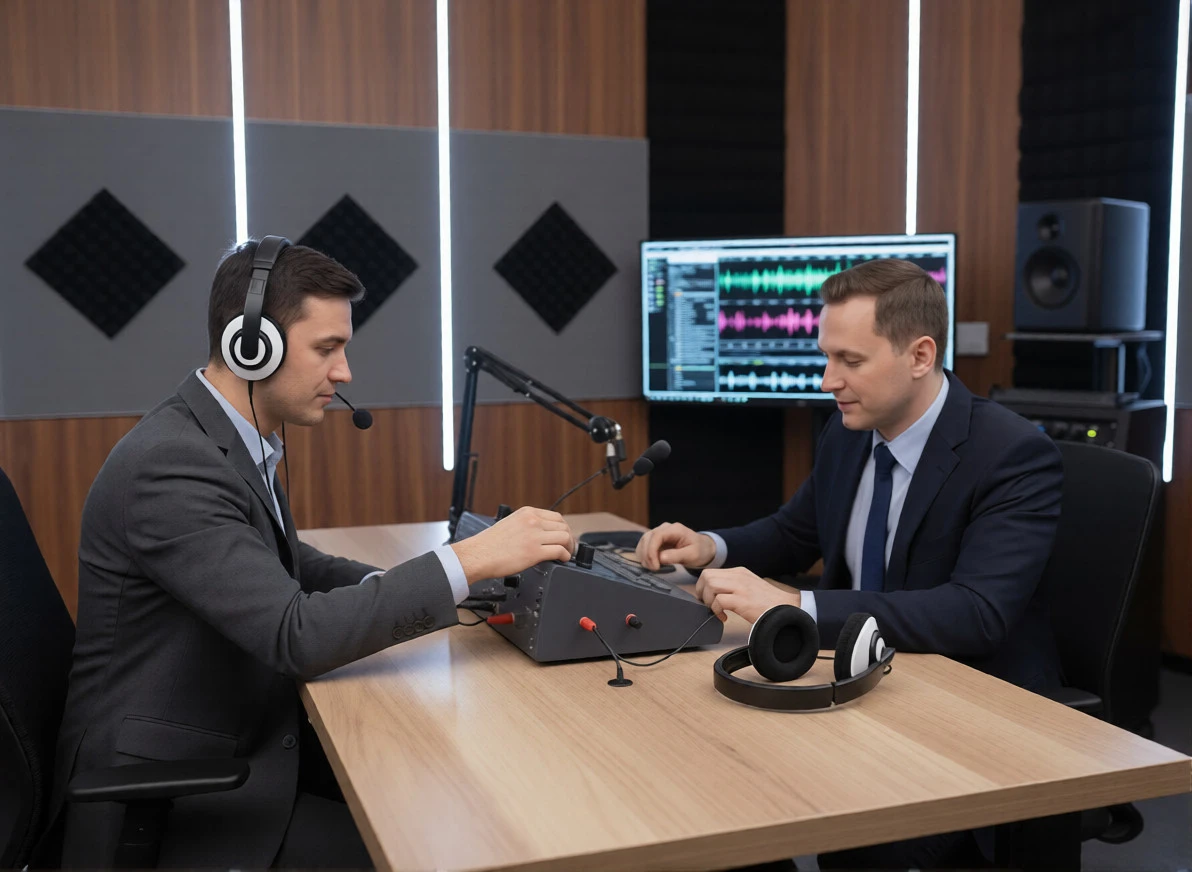
Interpreting systems are widely used across various industries and event types, including:
-
International conferences and summits
-
Corporate meetings and negotiations
-
Government and NGO events
-
Educational seminars and workshops
-
Religious and cultural gatherings
Any event involving participants from different language backgrounds can benefit from a professional interpreting system.

Interpreting System Integration with Conference Equipment
An interpreting system often works alongside other conference equipment, such as delegate microphones and sound systems. Proper integration ensures synchronized audio, minimal interference, and smooth communication across all channels.
This combination creates a complete conference solution that supports both speakers and audiences effectively.
Choosing the Right Interpreting System
Selecting the right interpreting system depends on several factors:
-
Number of participants
-
Number of languages required
-
Venue size and layout
-
Event duration
Professional consultation helps ensure the system meets technical and communication needs without unnecessary complexity.
Conclusion
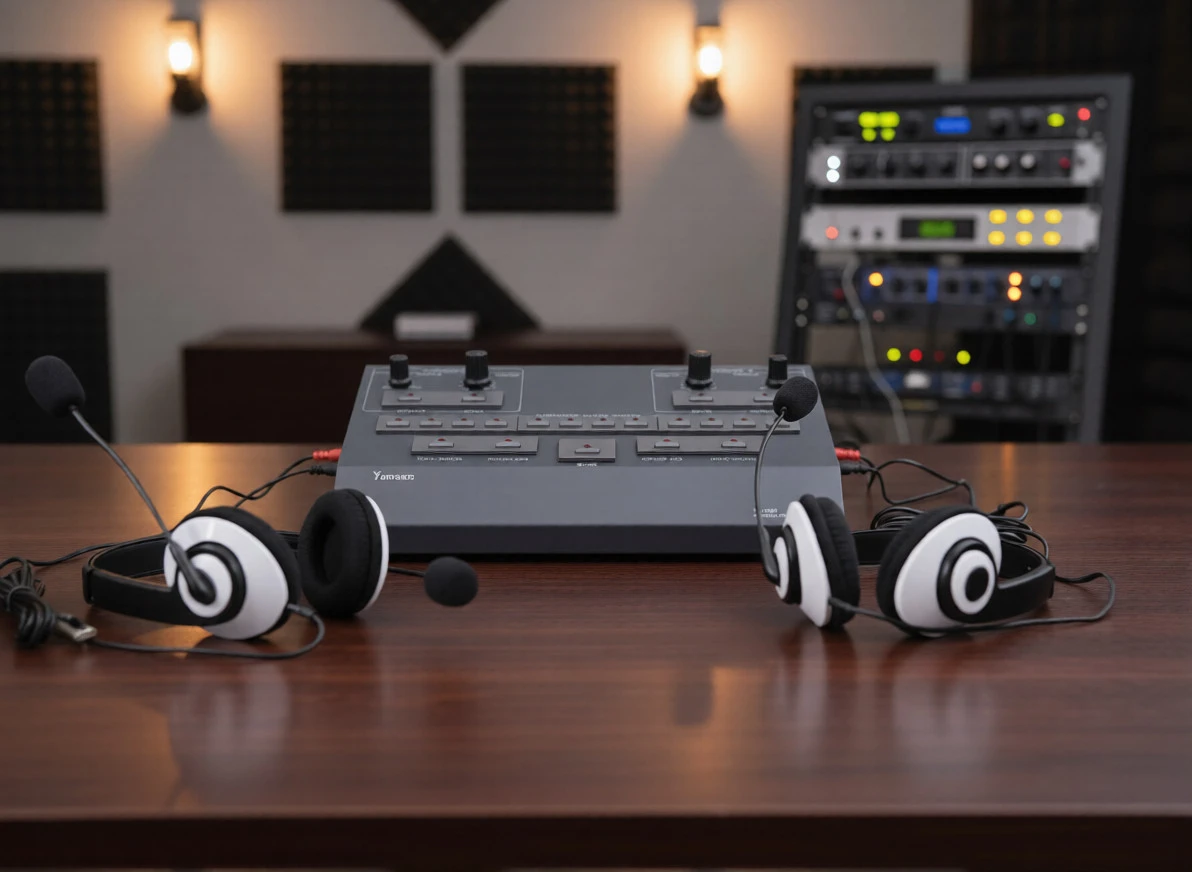
An interpreting system is no longer optional for multilingual events—it is essential. From international conferences to corporate meetings, a reliable interpreting system ensures accurate communication, professional presentation, and meaningful engagement across languages.
Choosing the right interpreting system allows organizations to deliver inclusive, well-structured, and successful events in today’s global environment.